
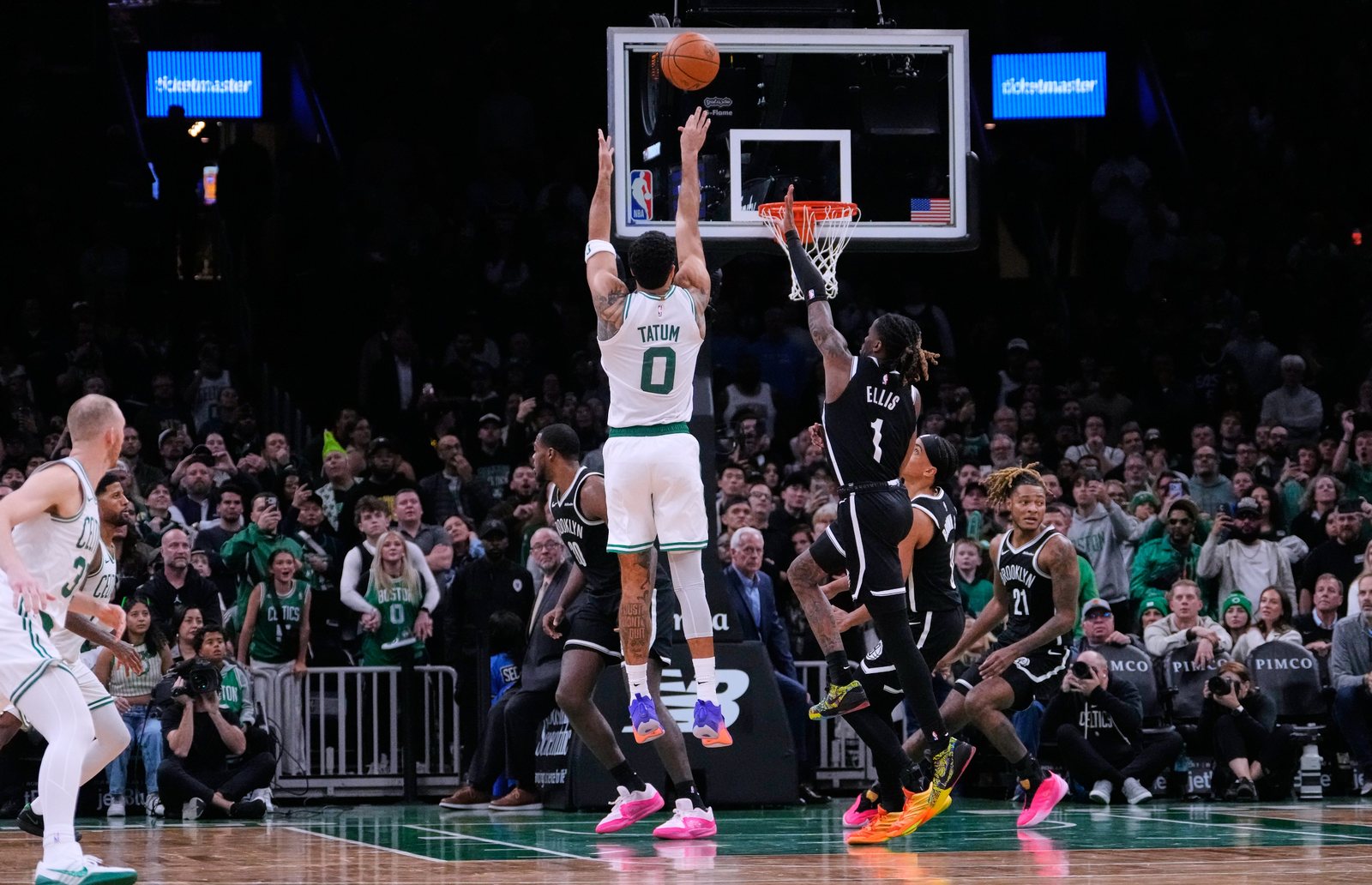
The Celtics are 4-1, they scored 44 points in the first quarter against the Bulls on Friday, and I think their fourth quarters are a real problem. Through five games Boston has outscored opponents by 75 points over the first three quarters and been outscored by 30 in the fourth, per the box scores linked from Basketball Reference. It has lost the fourth quarter in four of five games.
My take, as of Saturday, before Sunday’s game in Orlando: some of that is garbage time, and the rest is a closing problem that Jayson Tatum has had to rescue twice. It cost Boston the opener. The fix is in Joe Mazzulla’s hands: tighter late-game rotations, starting with keeping Mitchell Robinson off the floor when the other team can foul him.
The numbers by quarter
Here is how the first five games break down, from the box scores.
| Quarter | Celtics | Opponents | Margin |
|---|---|---|---|
| First | 157 | 131 | +26 |
| Second | 151 | 127 | +24 |
| Third | 153 | 128 | +25 |
| Fourth | 135 | 165 | -30 |
| Overtime | 8 | 7 | +1 |
Be fair about the two Bulls games. Boston led Chicago 105-75 after three quarters on Oct. 26 and won that fourth 29-24. On Friday it led 99-74 going into the fourth and lost the quarter 37-26, but Tatum was the last starter to sit, with 5:01 left and Boston up 114-95, per the play-by-play. Chicago scored 16 of its 37 after that. I’m not reading much into that one.
The other three games were close, and those are the ones that count. Boston led all three going into the fourth: 88-82 in Detroit, 83-73 against the Knicks and 86-82 against the Nets. It was outscored 104-80 across those three fourth quarters. Opponents shot 34 of 63 from the field and 17 of 37 from three. Boston shot 29 of 67 and 8 of 27 from three.
Detroit showed the worst version
The opener is the clearest example. Boston led 72-50 in the third quarter, after Paul George hit three 3-pointers in 52 seconds, per Field Level Media. Early in the fourth the lead was 96-84. Derrick White’s 3-pointer with 8:19 left made it 99-89, and that was the Celtics’ last basket for a long time. Detroit scored the next 23 points, with Duncan Robinson scoring 15 of his 21 in the quarter, and won 121-113.
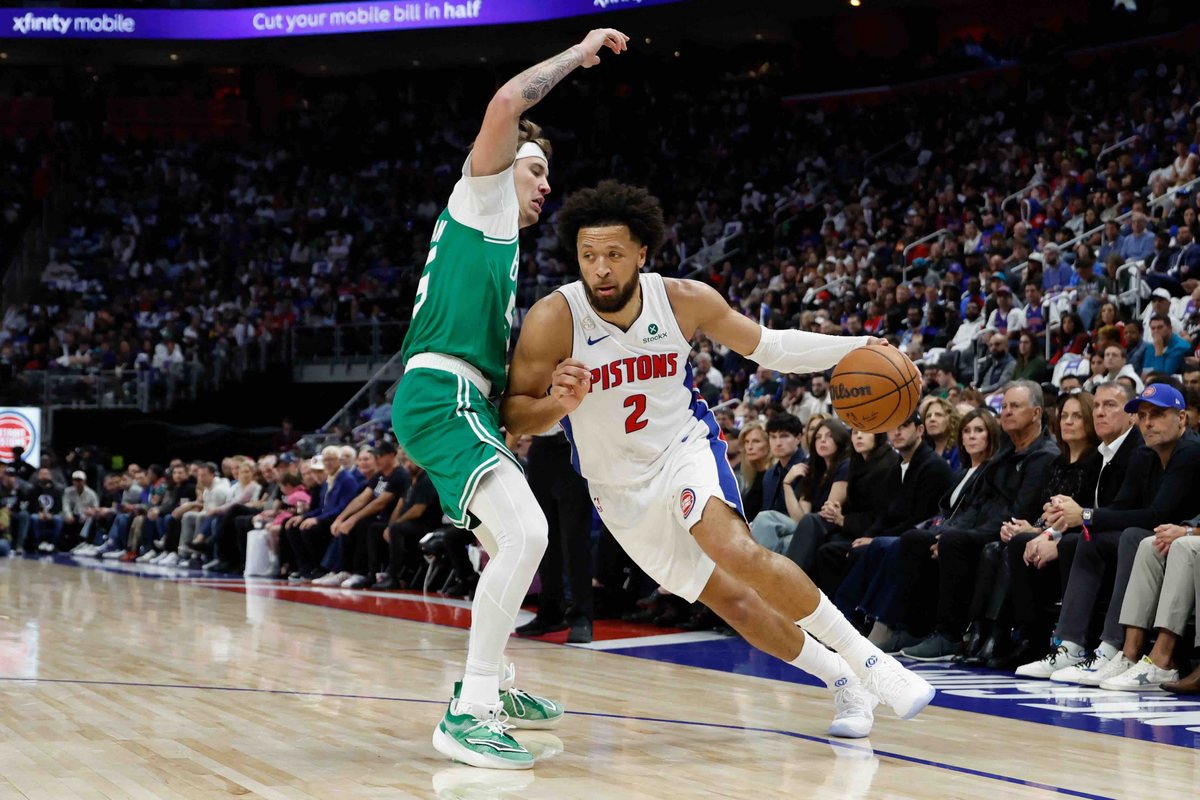
“I think some of our empty offensive possessions led to their transition,” Mazzulla said afterward, per Jay King of The Athletic. That is the right diagnosis. During the run, the play-by-play on Basketball Reference shows Boston coming up empty on missed 3s, missed jumpers and a blocked layup while Detroit kept scoring.
The Knicks and Nets games looked the same until Tatum
The pattern repeated at home. Against New York, Neemias Queta’s and-one made it 94-82 with 8:01 left. Boston didn’t score again until Tatum’s layup at 3:27, per the play-by-play. The Knicks cut it to 94-91 in that stretch. Then Tatum scored seven of Boston’s final eight points, the AP reported, and the Celtics won 107-103.
Against Brooklyn on Oct. 27, the Celtics went into the fourth up four and trailed 109-104 with 2:57 left, per the AP. White’s and-one off a Tatum pass with 33.7 seconds left gave them a 114-111 lead. With free throws going both ways, Boston still led 117-114 with three seconds to go. That should have been the game.
Robinson cannot be on the floor late
The Brooklyn finish is the one I’d change first. With Boston up 117-114 and three seconds left, Mazzulla sent Robinson in for Queta while Julius Randle was at the line. Robinson grabbed the rebound on Randle’s missed second free throw, Moritz Wagner fouled him right away, and he missed both. Mikel Brown Jr. tied it with a 3 with 0.2 seconds left, and Tatum had to win it with a 17-footer at the overtime buzzer to finish a 40-point night.
Robinson has made 5 of his 13 free throws this season, per Basketball Reference, and the AP noted he is a 50.7 percent career free-throw shooter. He also missed both free throws with Boston up 96-87 in the fourth quarter in Detroit, less than a minute before the 23-0 run started. He is useful for most of a game. In the last minutes of a close one, the other team gets to choose when he shoots.
What to change
The good news is the first three quarters. A team that is plus-75 through three periods in five games has a real rotation. Payton Pritchard has been a huge part of it, including 30 points on Friday, and Mazzulla called that “the absolute best version of him,” per The Boston Globe’s Adam Himmelsbach. I made the case for leaning on him in why Pritchard’s contract is a bargain Boston has to use now.
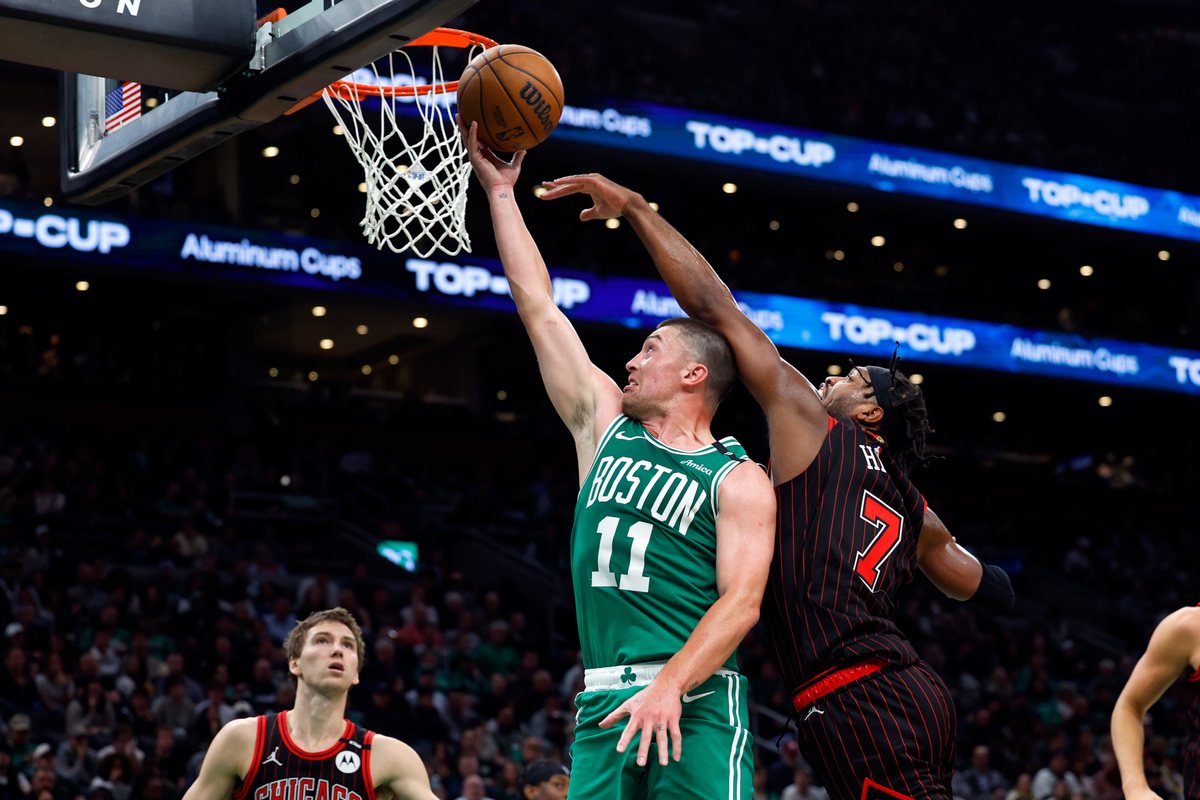
Late in close games, I want three things. First, Queta closes over Robinson whenever the game is within two possessions in the final two minutes. Second, the offense needs a plan for the middle of the fourth. Tatum was on the floor for most of the dry spells in Detroit and against the Knicks, and he went 1 of 5 in the fourth in Detroit, so this isn’t only about who sits. Boston got late shot-making from him against New York and Brooklyn, and it should stop needing it. Third, the 3-point defense has to hold up late: opponents making 17 of 37 in three fourth quarters is too many.
George is part of the answer too, as long as his minutes hold up. I wrote about keeping him fresh in the case for guarding Paul George’s minutes, and a back-to-back in Orlando and Houston on Sunday and Monday is the next test of that.
Boston has the first three quarters figured out. Until the last six minutes of a close game stop depending on Tatum hitting tough shots, I’d keep worrying about the fourth, and the first test is Sunday afternoon in Orlando.